One week of changes, all of them on the site. The extension has not moved, and there is a section at the end about what that means for reading the rest of this.
The 14-day trial is free
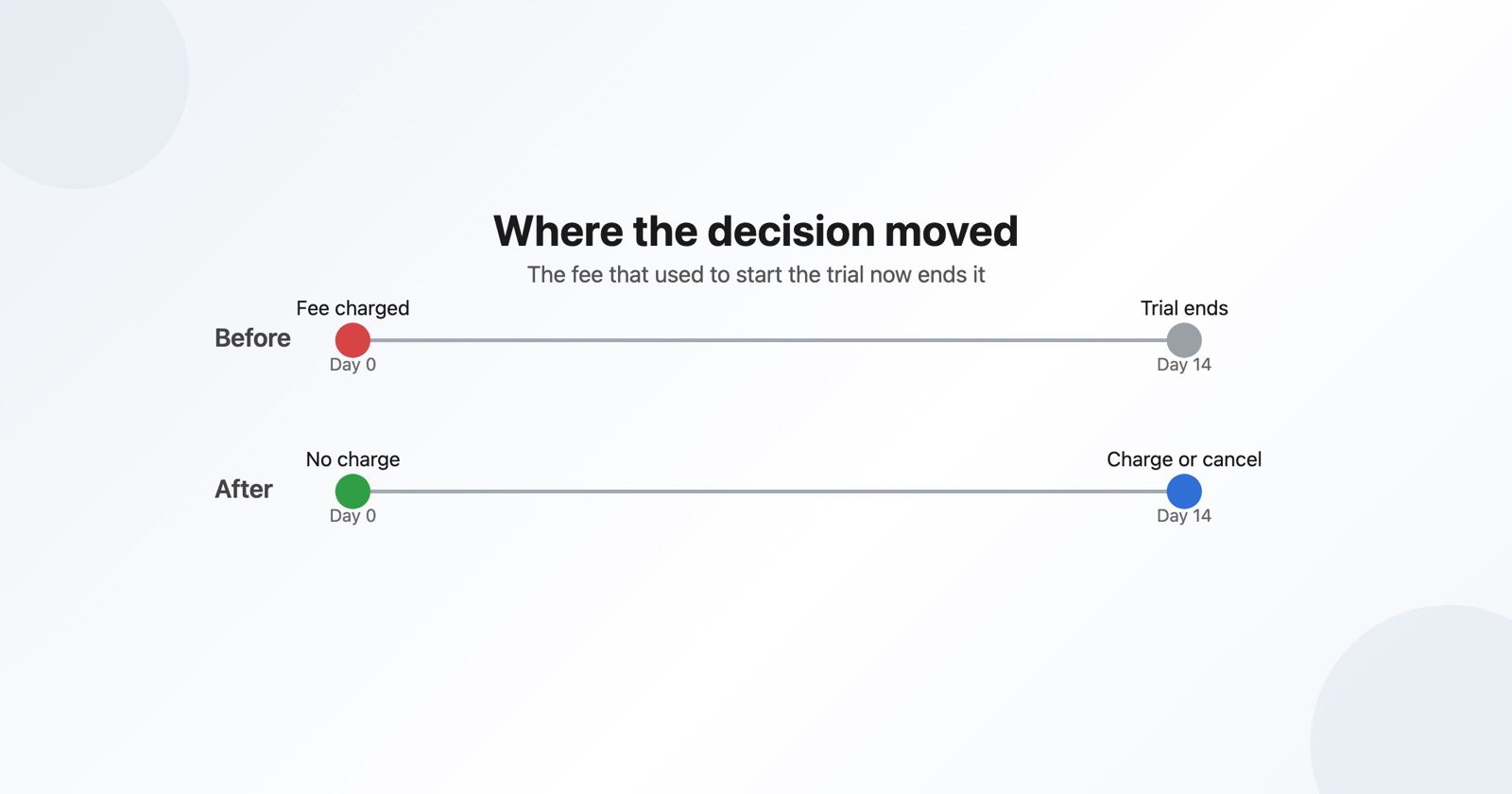
Starting a trial used to add a one-off fee at checkout. It does not any more. Starting a trial now charges nothing on the day you start it.
A card is still collected, and the plan’s recurring price charges for the first time when the fourteen days end, so a trial still becomes a subscription unless you cancel. You can cancel at any point before then and pay nothing at all.
The reason this is worth a section rather than a line is where it moves the decision. A fee at the start asks somebody to commit before they have filed a single report, which is the one moment they have the least information. The decision now sits at the end of the trial, when there is something to judge it on.
The free plan is separate, and still needs no card
These two were easy to confuse on the same page, so the pricing FAQ now separates them in as many words. The free plan is not the trial and it is not time limited. It needs no card at all, and it covers capturing bugs, sharing links and keeping a history of your own reports.
So there are two ways to use this without paying, and they are not the same one. If you only want to file reports and send them on, that is the free plan and the trial is irrelevant to you. The trial exists for the paid features, which is what visual bug reporting looks like once a team rather than a person is on the receiving end.
Free teams are told on the dashboard
The change above is on the marketing pages, which is not where somebody who has already signed up is looking. Free teams now see that the trial is free on the dashboard itself.
This is a small thing that matters because of who it reaches: the people most likely to want a paid feature are the ones already using the free one, and until now they would have had to go back out to the pricing page to learn that trying it costs nothing.
A report reached through a referral can offer you an account
Open a report that somebody shared with you through a referral link, and the header of that report now offers you an account.
The reasoning is about who that person is. Somebody reading a shared bug report is usually a colleague of the reporter, and very often the next person who will need to file one. The page they landed on used to show them the report and nothing else, which is a strange thing to do to the single most likely future user in the building.
What is actually in your hands
The site releases continuously, so everything above is deployed and live as you read it. There is nothing to update and nothing to install for any of it.
The extension has not changed. The Chrome Web Store is serving 1.11.0, published on 19 September, and that is what you have. Nothing in this post depends on an extension release, which is worth saying plainly: a release note that mixes the two leaves you unsure whether the thing you just read about is waiting on an update you have not taken.